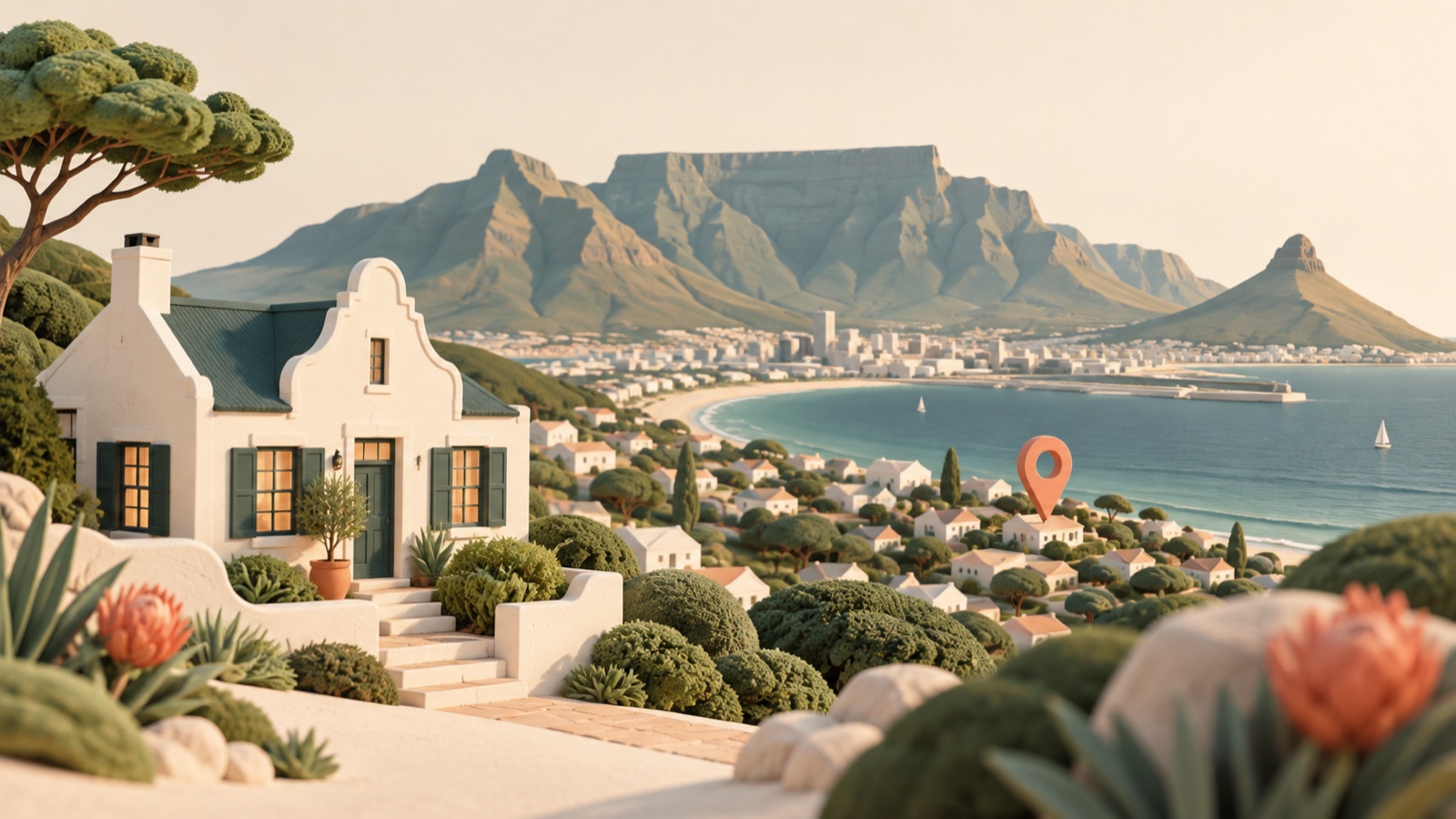
Cape Town's property market is one of the most desirable in Africa. It's also one of the most diverse - the Atlantic Seaboard market operates on entirely different dynamics from the Northern Suburbs, and the Winelands is its own world entirely. If you're considering buying in Cape Town in 2026, here's a guide to the major areas and what they offer.
Southern Suburbs
Who it's for: Families, professionals, buyers looking for established suburbs with good schools and access to UCT.
The Southern Suburbs - Rondebosch, Claremont, Kenilworth, Wynberg, Constantia, Hout Bay, Tokai, and Plumstead - are among Cape Town's most consistently popular residential areas. They offer established infrastructure, good schools, and relative proximity to both the city centre and the airport.
Constantia represents the premium end - large plots, privacy, and the valley lifestyle. Prices range from R8 million to R30 million+.
Rondebosch and Claremont offer more accessible entry points (R2.5 million to R6 million for houses) with the benefit of UCT proximity and strong school networks.
Atlantic Seaboard
Who it's for: Luxury buyers, international buyers, lifestyle-driven purchasers, investors.
The Atlantic Seaboard - Sea Point, Mouille Point, Green Point, Bantry Bay, Clifton, Camps Bay - is Cape Town's prestige coastal strip. Properties here command a significant premium for mountain and ocean views, walkability, and proximity to Cape Town's best restaurants and beaches.
Entry-level apartments in Sea Point start around R2 million. Clifton and Camps Bay properties for R10 million to R50 million+.
This market is international in character - a meaningful portion of buyers are South African expats, foreign nationals, and semigration buyers from Gauteng with significant equity from Joburg home sales.
Northern Suburbs
Who it's for: Families prioritising space and value, buyers relocating to Cape Town who need more property for their money.
Durbanville, Bellville, Brackenfell, Kraaifontein, and Edgemead offer significantly more property for the price compared to the southern suburbs. A family home that costs R6 million in Rondebosch might cost R3 million in Durbanville.
The Northern Suburbs have strong schools, good infrastructure, and are popular with buyers who prioritise space and value over lifestyle proximity.
The Winelands
Who it's for: Buyers seeking a lifestyle change, semigration buyers, those working remotely.
Stellenbosch, Paarl, and Franschhoek offer a fundamentally different lifestyle from Cape Town's urban areas. Vineyard estates, historic architecture, world-class restaurants, and mountain settings.
Stellenbosch remains the most active Winelands market, driven by the university, a growing tech hub, and strong lifestyle appeal. Entry-level townhouses from R2.5 million; wine estate properties to R20 million+.
The Overberg
Who it's for: Remote workers, retirees, lifestyle buyers seeking coastal living without Cape Town prices.
Hermanus, Stanford, and Kleinmond have seen significant demand from buyers who can work remotely and want ocean and mountain access without Atlantic Seaboard prices. Entry-level homes from R1.5 million.
What to know before buying in Cape Town
- Cape Town's Deeds Office is generally efficient but rates clearance from the City of Cape Town can take 4-6 weeks
- Beetle certificates (entomologist COC) are required for properties with timber elements
- Load shedding infrastructure (solar, backup) is a genuine value driver
- The semigration premium is real but has moderated slightly as more stock has come to market