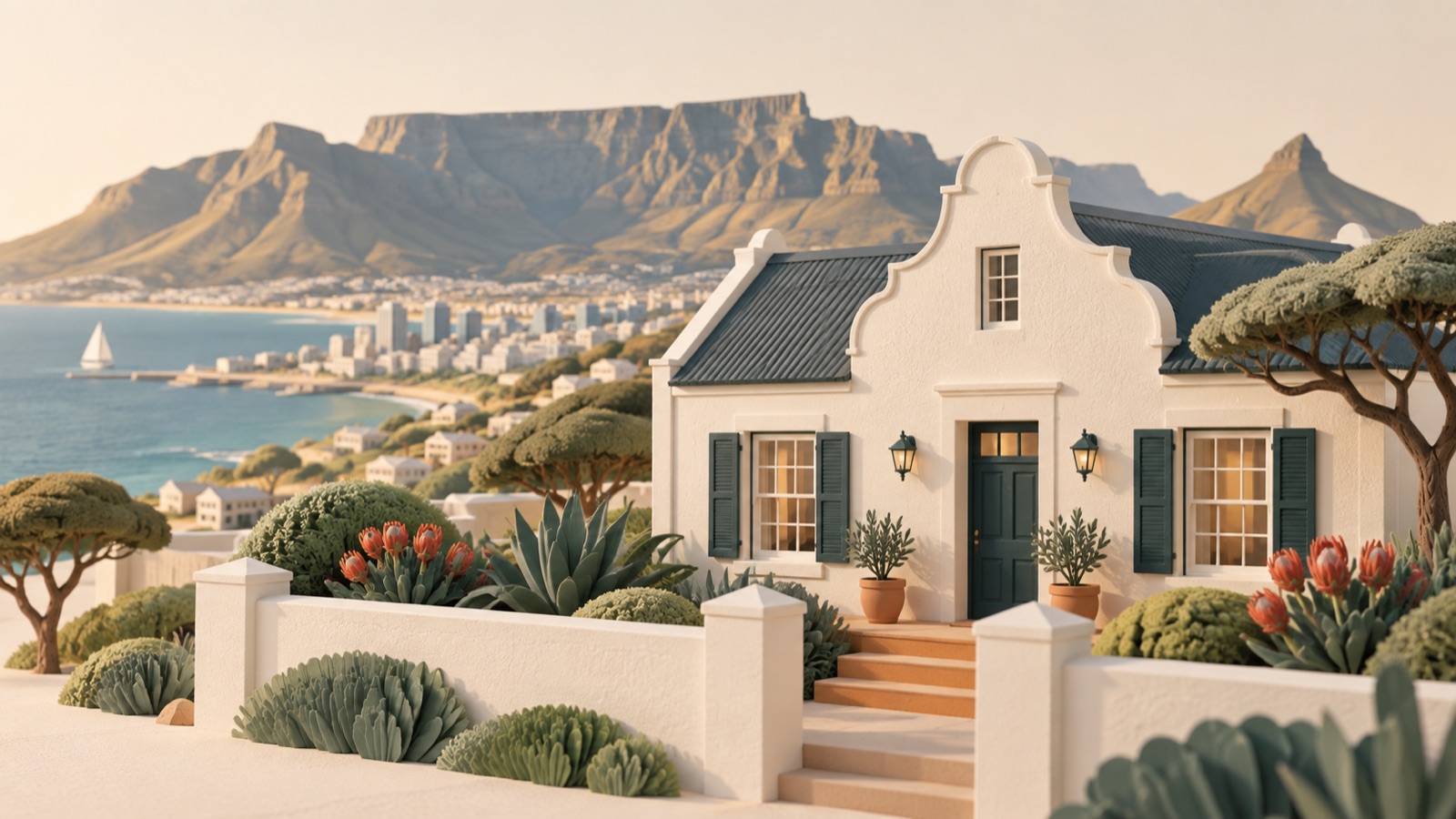
Cape Town's property market has its own character. It's one of the most sought-after property markets in Africa, it attracts both local and international buyers, and it has a few specific legal and practical requirements that sellers in other provinces don't always encounter. If you're selling in the Western Cape, here's what to know.
The Cape Town market at a glance
Cape Town's residential property market is consistently one of South Africa's strongest performers. The combination of lifestyle appeal, natural beauty, relative municipal efficiency, and semigration from other provinces (particularly Gauteng) keeps demand healthy even during national market slowdowns.
This doesn't mean every property sells quickly or at asking price - but well-priced, well-presented homes in popular suburbs tend to attract serious buyers.
Popular residential areas in Cape Town and the surrounding region include the Atlantic Seaboard, Southern Suburbs, Northern Suburbs (Bellville, Durbanville, Brackenfell), the Winelands (Stellenbosch, Paarl, Franschhoek), and the Overberg (Hermanus, Kleinmond).
Beetle certificate requirements
One requirement specific to the Western Cape (and KwaZulu-Natal) is the beetle inspection certificate - also called an entomologist certificate.
In the Western Cape, a beetle certificate is required for:
- Properties with any wooden elements (floors, beams, roof structures, window frames)
- Older properties in particular
The inspection is conducted by a registered entomologist or pest control specialist. They inspect for wood-boring beetles (borer beetles and others) and treat any infestations found.
Cost: Typically R800 to R2,500 for the inspection, plus treatment costs if infestation is found.
Timing: Book this early. Discovering a significant infestation can delay your sale while treatment takes place.
The strong demand for lifestyle properties
Cape Town's market is driven significantly by lifestyle. Proximity to the sea, mountain views, good schools, and the general Cape Town "way of life" are genuine value drivers that don't exist in the same way in Gauteng.
This means that marketing your property well - beyond the specs - matters. A good listing for a Cape Town property doesn't just describe bedrooms and bathrooms; it captures the lifestyle the property enables.
What resonates with Cape Town buyers:
- Outdoor entertaining spaces
- Natural light
- Mountain or sea views (even partial)
- Proximity to specific schools
- Walkability to amenities
- Fibre connectivity and backup power
Load shedding infrastructure is now a key value driver
Across South Africa, backup power solutions (solar panels, inverters, battery backup) have become genuine value drivers. In Cape Town, where buyers are often lifestyle-motivated and willing to pay a premium for convenience, well-installed solar or backup systems can meaningfully increase a property's appeal and value.
If your property has solar, a generator, or battery backup, make this prominent in your marketing.
The semigration premium
Cape Town has benefited significantly from semigration - the movement of South Africans from Gauteng and other provinces to the Western Cape. This trend has supported prices even during periods of national market weakness.
Buyers coming from Gauteng often have equity from a Joburg sale and are buying in Cape Town with a meaningful deposit or cash. This profile of buyer is serious and financially capable.
Working with Cape Town conveyancers
The Western Cape has a well-developed legal infrastructure for property transactions. Cape Town conveyancers are experienced and the Deeds Office in Cape Town (Deed Street, Cape Town) is generally efficient.
Rates clearance from the City of Cape Town can take four to six weeks during busy periods - factor this into your timeline expectations.